What is digital citizenship, and why does it matter for young people in Africa? A practical guide to safe, respectful and responsible online behaviour, from a youth-led NGO in Parakou, Benin.
Digital citizenship is the ability to use the internet and digital tools safely, respectfully and responsibly while taking part in the life of your community. For young people in Africa, where phones and social media have become part of daily life, it is no longer an optional skill: it shapes how we learn, find work, express ourselves and protect ourselves from harm. At Jeunesse Consciente du Bénin (JCB), a youth-led NGO based in Parakou, we believe every young person should be an informed and responsible digital citizen. This guide explains what that means in practice.
What does digital citizenship mean?
A digital citizen is not simply someone who owns a smartphone. Digital citizenship combines three things: technical skills (knowing how to use tools and platforms), critical thinking (judging whether information, offers and people can be trusted) and ethical behaviour (respecting others, protecting their privacy and obeying the law online). It extends the rights and duties of ordinary citizenship into digital spaces: you have the right to express yourself and to be safe, and the duty not to harm others.
This is why digital citizenship goes hand in hand with civic education. The values we promote at JCB, loyalty, respect for commitments and ethics in human, social and political relations, apply on a screen exactly as they do in the street.
Why digital citizenship matters for young people in Africa
Across the continent, young people are often the first generation to grow up online. Mobile phones give access to learning, markets and mobile money, and social media gives young voices an audience they never had before. The same tools also expose them to misinformation, harassment, identity theft and online fraud. Without guidance, a young person can lose savings to a fake job offer, damage a reputation with one careless post or be drawn into the culture of easy money.
Digital citizenship is the best long-term protection because it builds judgment, not just rules. A young person who knows how to verify a source, question a too-good-to-be-true promise and ask for help is safer on any platform, today and tomorrow.
Six habits of a responsible digital citizen
- Verify before you share. Check who published the information, look for the same story from other trusted sources and be careful with screenshots and voice notes forwarded without a source. Misinformation spreads fastest when we share without thinking.
- Protect your personal data. Use strong, different passwords, turn on two-step verification, never share one-time codes or mobile money PINs, and think twice before posting your location, ID documents or phone number.
- Respect others online. Behind every profile is a real person. Insults, harassment and humiliating posts cause real harm and, in many countries, are also punishable by law.
- Think before you post. Whatever you publish can be copied, saved and found years later by schools, employers and partners. Build a digital reputation you will be proud of.
- Recognise and report abuse. Learn how to block, mute and report on each platform, keep evidence such as screenshots, and tell a trusted adult or the competent authorities when something serious happens.
- Use technology to participate. Digital citizens do more than protect themselves: they follow public debates, take part in consultations, promote local initiatives and use technology to solve problems in their community.
Digital literacy in Benin: progress and gaps
Mobile connectivity and mobile payments have become part of everyday life in Benin. This progress creates real opportunities, but digital literacy does not grow automatically with access. Many young people can use an app without understanding how their data is collected, how scams are designed or how to check a claim. That gap between access and understanding is exactly where awareness work is needed: in schools, universities, families and neighbourhood associations.
What JCB is doing for responsible digital citizenship
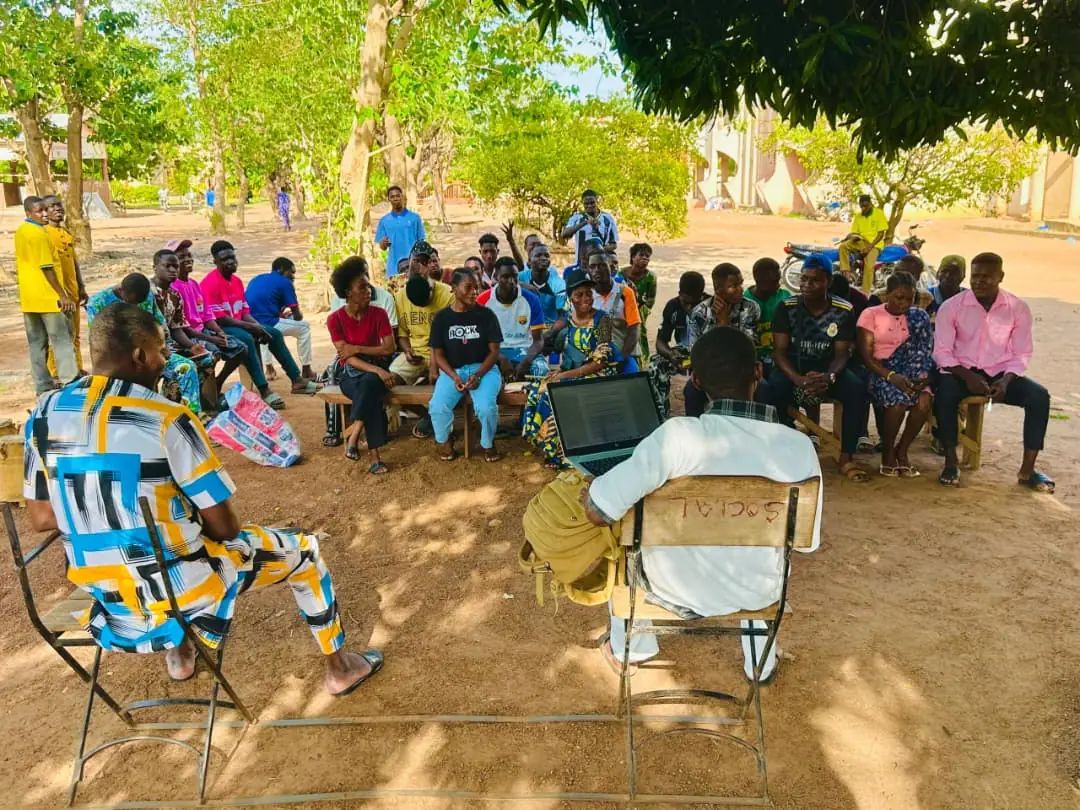
Promoting responsible digital citizenship is one of JCB’s flagship projects, delivered online so that it can reach young people across Benin. We combine online awareness content, face-to-face sessions and dialogue with institutions. In May 2026 our delegation held an institutional meeting with the National Digital Investigations Center (CNIN), and we ran an awareness session for students at the University of Parakou on cybercrime, gambling and the culture of easy gain. These actions reflect our conviction that digital safety is a shared responsibility between young people, families, schools, institutions and civil society.
Discover our flagship projects and the people behind them on our team page.
How to become a better digital citizen today
- Review the privacy settings of your social media accounts this week.
- Turn on two-step verification for your email, WhatsApp and social media accounts.
- Before forwarding a viral message, search for the original source.
- Talk with friends or family about one scam you have heard of, so that everyone recognises the warning signs.
- Join a youth organisation that works on civic and digital issues, or volunteer with JCB.
Frequently asked questions
What is the difference between digital literacy and digital citizenship?
Digital literacy is the ability to use and understand digital tools. Digital citizenship adds the values and responsibilities that guide how you use them: respect, safety, honesty and participation.
At what age should children learn about digital citizenship?
As soon as they start using a phone, tablet or computer. Simple rules about privacy, kindness and asking for help can be taught to young children, then deepened during adolescence.
How can an organisation in Benin work with JCB on digital citizenship?
Schools, associations, companies and institutions can partner with us for awareness sessions, training and campaigns. Visit our partnership page or contact us.
Want to support this work? You can make a donation, become a partner or volunteer: every contribution helps us bring digital citizenship to more young people in Benin.
Related articles
- How to Protect Young People from Online Scams in Africa
- Why Civic Education Matters for African Youth
- Youth Entrepreneurship in Benin: Challenges and Opportunities
- JCB and AYLI Explore an Online English and Public Speaking Programme for Young People in Benin
- JCB and Counting Forward Explore a Financial Education Initiative to Help Young People Avoid the Easy-Money Trap